

Introduction
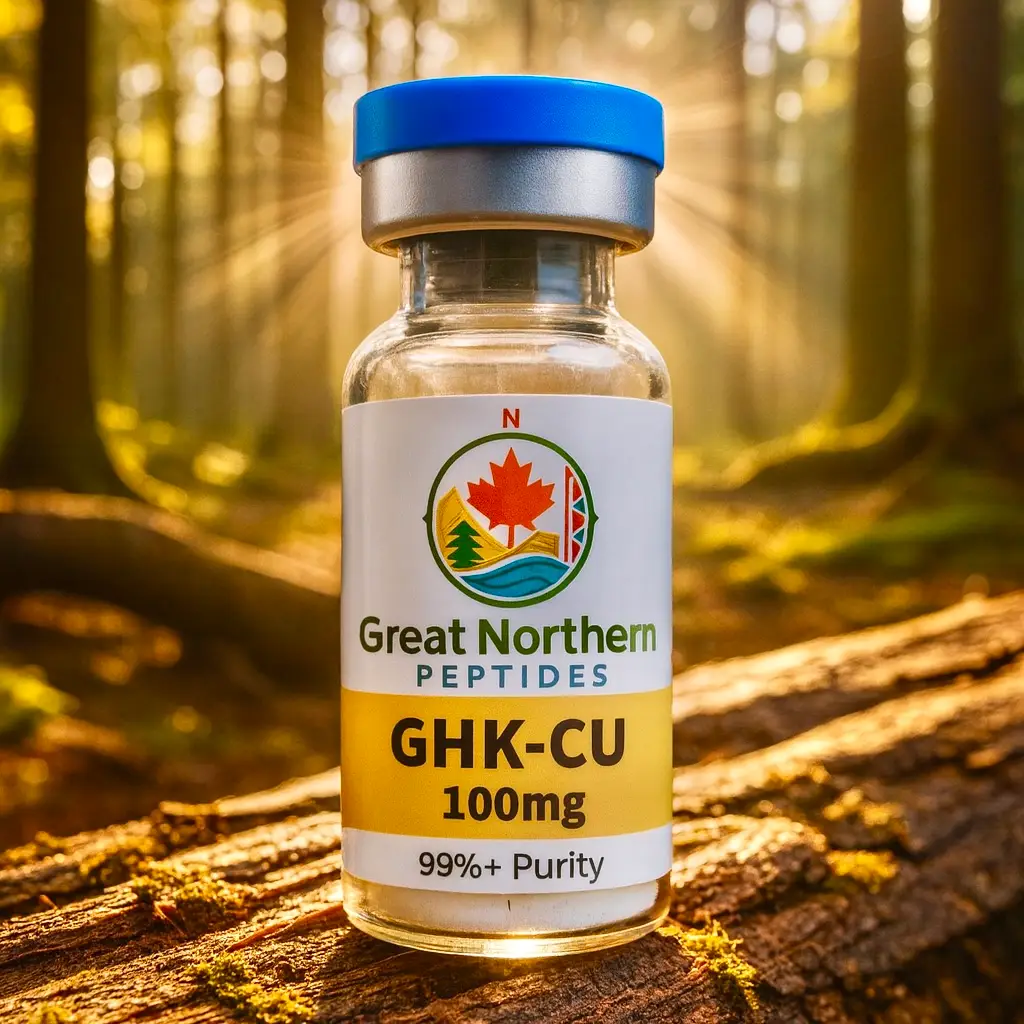
GHK-Cu is a copper-binding peptide complex composed of the tripeptide glycyl-L-histidyl-L-lysine coordinated with a copper(II) ion. It occurs naturally in human plasma, saliva, and urine and has been widely studied in biochemical and cellular research contexts. Due to its ability to bind copper ions with high affinity, GHK-Cu is commonly examined as a model peptide–metal complex in studies of cell signaling, extracellular matrix regulation, and gene expression. This article focuses on the molecular chemistry, physicochemical stability, and research considerations relevant to laboratory use of GHK-Cu.
Molecular Structure and Copper Chelation
The GHK peptide consists of three amino acids arranged in the sequence glycine, histidine, and lysine. The histidine residue plays a central role in copper chelation due to its imidazole side chain, which provides a strong coordination site for copper(II) ions. Additional coordination is contributed by the terminal amino group and backbone carbonyl groups, resulting in a stable square planar or distorted octahedral copper complex depending on solution conditions.
The copper-bound form, GHK-Cu, exhibits chemical properties distinct from the unbound GHK peptide. Free GHK does not display the same metal-mediated biochemical interactions and is generally less stable in aqueous environments. For this reason, many experimental studies specify the copper-complexed form rather than the free tripeptide when investigating biological activity.
Physicochemical Properties Relevant to Research
GHK-Cu is typically soluble in aqueous solutions, particularly when prepared under controlled pH conditions. Neutral to slightly acidic environments tend to favor complex stability, while extreme pH conditions may promote copper dissociation or peptide degradation. The presence of competing metal ions or chelating agents can also influence copper binding equilibrium.
Temperature plays an important role in maintaining complex integrity. Elevated temperatures can accelerate hydrolytic processes and increase the likelihood of metal exchange reactions. As a result, GHK-Cu is commonly handled at low temperatures during preparation and short-term storage when in solution.
Light exposure is generally not considered a major destabilizing factor, although prolonged exposure combined with oxygen and moisture may contribute indirectly to oxidative processes involving the copper ion.
Stability and Degradation Considerations
In laboratory settings, GHK-Cu stability depends on both its physical state and environmental conditions. Lyophilized forms of the peptide–copper complex tend to exhibit greater long-term stability than solutions. Once reconstituted, the complex may undergo gradual degradation through peptide bond hydrolysis or copper dissociation, particularly if stored for extended periods.
Repeated freeze–thaw cycles are commonly avoided, as they can disrupt coordination chemistry and alter effective copper concentration. Researchers often prepare single-use aliquots to maintain experimental consistency. These handling considerations are important when interpreting experimental results, as changes in complex integrity may influence observed cellular or biochemical effects.
In Vitro Research Applications
GHK-Cu has been extensively studied in vitro for its role in modulating cellular processes. Research has explored its influence on fibroblast activity, extracellular matrix protein expression, and signaling pathways associated with tissue remodeling. Gene expression studies have shown that copper-bound GHK can affect the transcription of genes involved in growth factor signaling and cellular repair mechanisms.
Because copper plays a key role in enzymatic activity and redox biology, GHK-Cu is also examined as a carrier system for delivering copper ions in a biologically accessible form. This property makes it useful in experimental models investigating copper-dependent cellular functions.
Distinction Between Research, Cosmetic, and Clinical Contexts
It is important to distinguish between the use of GHK-Cu in laboratory research and its appearance in cosmetic or investigational therapeutic contexts. In research environments, GHK-Cu is handled as a chemical compound intended for in vitro or non-clinical study. Concentrations, formulations, and exposure conditions used in laboratory experiments differ significantly from those found in commercial topical products.
GHK-Cu is not approved as a therapeutic drug, and research-grade material is not intended for diagnostic, therapeutic, or human use. Clear differentiation between experimental research applications and consumer-facing formulations is necessary when evaluating published studies and experimental outcomes.
Summary
GHK-Cu serves as an important model system for studying peptide–metal interactions and copper-mediated biological processes. Its molecular structure enables strong copper chelation, while its physicochemical properties require careful handling to preserve complex stability in laboratory settings. Ongoing research continues to explore its role in cellular signaling and gene regulation, with emphasis on controlled experimental conditions to ensure reproducible and interpretable results.